The Impact of Puzzles on Cognitive Development in Early Childhood
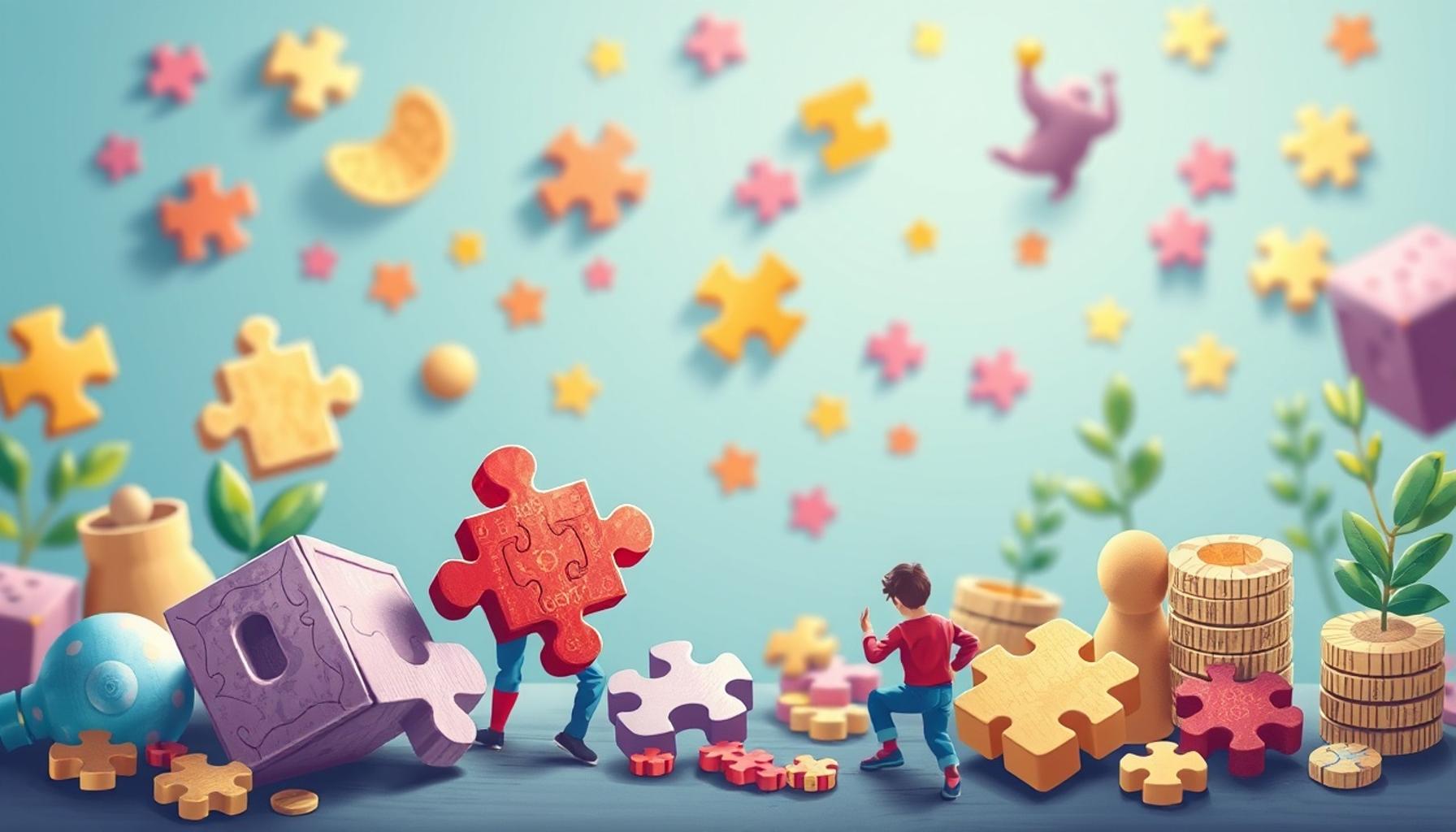
Puzzles have long been a staple in early childhood education, serving not only as a source of entertainment but also as a profound tool for cognitive development. Their interactive nature captivates young minds, making the process of learning both enjoyable and effective. As parents and educators increasingly seek effective methods to promote cognitive growth, understanding the multifaceted role of puzzles becomes crucial.
Understanding the Benefits
The impact of puzzles on cognitive development encompasses a wide array of benefits, which can be conveniently categorized into physical, cognitive, and emotional development.
- Enhancement of fine motor skills: Manipulating puzzle pieces requires precision and coordination which helps to develop children’s dexterity. For instance, picking up small pieces can improve grip strength, crucial for future skills like writing and drawing.
- Boosting spatial awareness: Puzzles teach children to recognize shapes, sizes, and patterns, laying the groundwork for geometry understanding. When a child successfully fits a piece into its designated spot, they gain a better grasp of how three-dimensional objects interact in space. This skill is particularly pertinent in activities like building blocks or drawing.
- Encouragement of patience and perseverance: Completing a puzzle demands sustained attention and determination, qualities that are essential for overcoming challenges not just in play but also in academic and everyday scenarios.
Beyond these physical and cognitive enhancements, puzzles also have a significant influence on emotional and social development. When children work collaboratively on a puzzle, they engage in teamwork, fostering communication and social skills. They learn to share ideas, negotiate roles, and celebrate collective accomplishments which creates a sense of community and belonging.
Research Insights
Interestingly, research highlights that children who regularly engage with puzzles from an early age tend to excel in critical cognitive areas. For instance, a study published in the journal Developmental Science found that children who practiced with puzzles displayed higher scores in both math and spatial reasoning assessments. This correlation suggests that the cognitive skills developed through puzzles can translate into better academic performance, particularly in areas that require abstract thinking.
This knowledge supports the integration of puzzles into children’s playtime routines, making them not just an entertaining option but a strategic educational tool. From simple wooden shapes for toddlers to complex jigsaw puzzles for older children, there is an array of options available that cater to various age groups and interests.
In conclusion, the humble puzzle transforms playtime into a rich learning experience, offering an engaging way for children to enhance their cognitive abilities. With an emphasis on not just entertainment, but skill growth, the puzzle stands out as an enduring favorite in early childhood education, promising substantial benefits for young minds eager to explore and understand the world around them.
DISCOVER MORE: Click here to learn how puzzle games can enhance your memory
The Multifaceted Advantages of Puzzles
Puzzles are a dynamic and versatile tool for early childhood development, unlocking a treasury of skills that are vital during the formative years. They provide children not just an avenue for leisure but an enriching space where multiple aspects of their development are nurtured. Understanding these advantages can help parents and educators make informed decisions regarding playtime resources.
- Promotion of Problem-Solving Skills: Puzzles inherently encourage children to engage in critical thinking and problem-solving. As they attempt to fit pieces together, they must assess which shapes and edges align, leading to an improved ability to think logically and critically—a skill that is essential for academic success and life challenges.
- Improvement in Memory Retention: Working on puzzles boosts memory as children remember the appearance of pieces and their potential placements. This activity helps to forge stronger neural connections that enhance both short-term and long-term memory—a key factor in learning new concepts.
- Enhancing Concentration: The immersive experience of completing a puzzle cultivates focus and concentration in young minds. Children learn to filter distractions and dedicate their attention to one task at a time, fostering a skill that is increasingly vital in an age filled with information overload.
- Increased Creativity: Engaging with puzzles also stimulates creativity. As children see how pieces fit together, they often begin envisioning new ways to approach problems, something that is valuable not only in the arts but in sciences and technology fields as well.
Research substantiates these claims, demonstrating that regular engagement with puzzles leads to measurable improvements in various cognitive domains. For instance, a study conducted by the University of Chicago highlights that children aged 2 to 4 years who interacted with puzzles outperformed their peers in tests of mathematical and spatial reasoning skills. This assertion indicates a significant connection between early puzzle play and later academic success, especially in STEM fields, where strong spatial reasoning is crucial.
Furthermore, the evolution of puzzles—from traditional wooden pieces to modern interactive digital versions—offers a means for continuous engagement throughout childhood. By varying the complexity and themes, children can consistently find challenges that resonate with their growing abilities and interests. This tailored approach not only maintains their enthusiasm but also nurtures their cognitive development effectively.
As we delve deeper into the impact of puzzles on cognitive development, it becomes clear that these seemingly simple games are far from ordinary. They play a pivotal role in equipping children with the mental tools necessary to navigate their lives, proving to be invaluable in shaping their future. Understanding and leveraging these benefits can result in enriched educational practices for children, guided by the strategic incorporation of puzzles into their daily activities.
The exploration of puzzles as an educational tool reveals a myriad of advantages for enhancing cognitive development in young children. Engaging with puzzles not only fosters skills like problem-solving and critical thinking but also promotes various cognitive functions such as concentration and memory retention. Observations indicate that children who regularly interact with puzzles exhibit improved visual-spatial skills, which are vital for tasks ranging from reading maps to understanding geometry in later years.
Additionally, puzzles require children to think strategically about how pieces fit together, leading to greater cognitive flexibility. This aspect encourages them to find multiple solutions to a single problem, a skill that is invaluable in both academic settings and real-life situations. In crafting their approaches, children learn resilience and perseverance, vital characteristics that will benefit them throughout their development.
It is also worth noting that the social element of puzzles can enhance their cognitive impact. When children work in pairs or groups, they benefit from peer interactions, learning to communicate their thoughts and strategies effectively. This interaction not only enriches their vocabulary but also offers insights into collaborative problem-solving techniques.
The ability to balance challenge with enjoyment is another reason puzzles are advocated by educators. When puzzles are appropriately leveled for age and ability, children feel a sense of accomplishment when they solve them, motivating them to engage in further cognitive challenges. As they master puzzles, they build a foundation for tackling more complex cognitive tasks in the future.
| Cognitive Benefits | Description |
|---|---|
| Problem-Solving Skills | Puzzles encourage children to think critically about how to fit pieces together, enhancing their ability to solve problems. |
| Visual-Spatial Skills | Regular engagement with puzzles develops important visual-spatial abilities, critical for activities like reading and navigating spaces. |
In summary, the integration of puzzles into a child’s playtime offers rich rewards for cognitive development. By providing both educational and entertainment value, puzzles serve as a powerful tool in nurturing young minds and enhancing their future academic success.
DISCOVER MORE: Click here to dive deeper
Puzzles as a Catalyst for Social Interaction
In addition to enhancing cognitive skills, puzzles serve as a remarkable catalyst for social interaction among young children. The collaborative nature of puzzle-solving nurtures essential social skills such as teamwork, communication, and emotional intelligence. When children work together on puzzles, they not only share ideas but also learn to express their thoughts and feelings more effectively. This cooperative gameplay fosters a sense of belonging and mutual respect, crucial components of emotional development.
- Encouraging Teamwork: When tackling puzzles in groups, children must negotiate and define roles, which promotes teamwork. Discussions about strategies and piece placements initiate peer interactions that can strengthen friendships and build vital social networks.
- Communication Skills: As children articulate their thoughts and listen to others, their communication skills improve. Research shows that early exposure to collaborative problem-solving enhances expressive language abilities, allowing children to articulate their ideas with greater clarity and confidence—skills that can significantly impact their academic success as they progress through school.
- Development of Emotional Intelligence: Working with others on a puzzle allows children to navigate emotions such as frustration and triumph. They learn to manage these feelings through shared experiences, which promotes empathy and social awareness. Understanding emotional cues in oneself and others is a foundation for building healthy relationships throughout life.
The multifaceted benefits of social interaction during puzzle play can be particularly observed in various educational settings. For instance, preschool programs that integrate puzzle-solving activities often report improved social cohesion among students. A study by the National Institute for Early Education Research suggests that children engaged in cooperative learning experiences, such as group puzzle-solving, exhibited increased participation in classroom activities and higher levels of peer support.
Spatial Awareness and Fine Motor Skills through Puzzles
Another significant aspect of puzzle play is its role in developing spatial awareness and fine motor skills, both of which are foundational for later learning. Engaging with puzzles requires children to manipulate pieces, enhancing their dexterity and hand-eye coordination. These physical skills are crucial not only for puzzle-solving but also for tasks such as writing, drawing, and other forms of expression.
- Advancing Fine Motor Skills: As children grasp and fit pieces together, they strengthen the small muscles in their hands and fingers. This development is essential for future tasks that require precision, including grasping a pencil or using scissors.
- Boosting Spatial Awareness: Puzzles help children understand the relationships between objects in space. For example, figuring out how different shapes fit within a confined area enhances spatial reasoning—a skill that is critical for math and scientific learning. Spatial reasoning abilities are particularly important in fields such as architecture, engineering, and technology.
Educational initiatives focusing on STEM (Science, Technology, Engineering, Mathematics) have increasingly recognized the value of puzzles in nurturing these specific skills. Many programs incorporate puzzle activities into their curricula, enabling children to excel in spatial understanding. This correlation is supported by research undertaken by the American Psychological Association, which suggests that children who regularly engage in spatial reasoning activities score higher in math and science assessments later in their educational journeys.
By facilitating social interaction and the development of physical skills, puzzles emerge as an essential instrument in the toolbox of early childhood education. Their benefits extend far beyond mere play, significantly impacting cognitive and social growth in invaluable ways.
DISCOVER MORE: Click here to delve deeper
Conclusion: Unveiling the Potentials of Puzzles in Early Childhood Development
The exploration of the impact of puzzles on cognitive development in early childhood reveals a multifaceted approach to learning that is both engaging and effective. Through the intricate process of solving puzzles, children not only enhance their problem-solving abilities and critical thinking skills but also develop essential aspects of their social and emotional intelligence. The collaborative nature fostered during puzzle-solving activities reinforces teamwork, hones communication skills, and supports emotional growth through shared experiences of success and frustration.
Moreover, puzzles play a pivotal role in advancing fine motor skills and spatial awareness, building a foundation that imparts future benefits for academic achievement, particularly in STEM fields. Research consistently demonstrates that engaging with puzzles correlates with improved performance in subjects like math and science, illustrating how these seemingly simple activities can have profound long-term implications.
As educators and parents recognize the invaluable benefits of puzzles in cultivating a well-rounded developmental experience, integrating them into early learning environments becomes increasingly imperative. Through this understanding, we can embrace puzzles not merely as a means of entertainment but as a powerful educational tool that shapes the future cognitive and social landscape of our children. In an ever-evolving world, enabling children to develop these skills early on ensures they are better equipped to navigate the complexities of life and learning ahead.